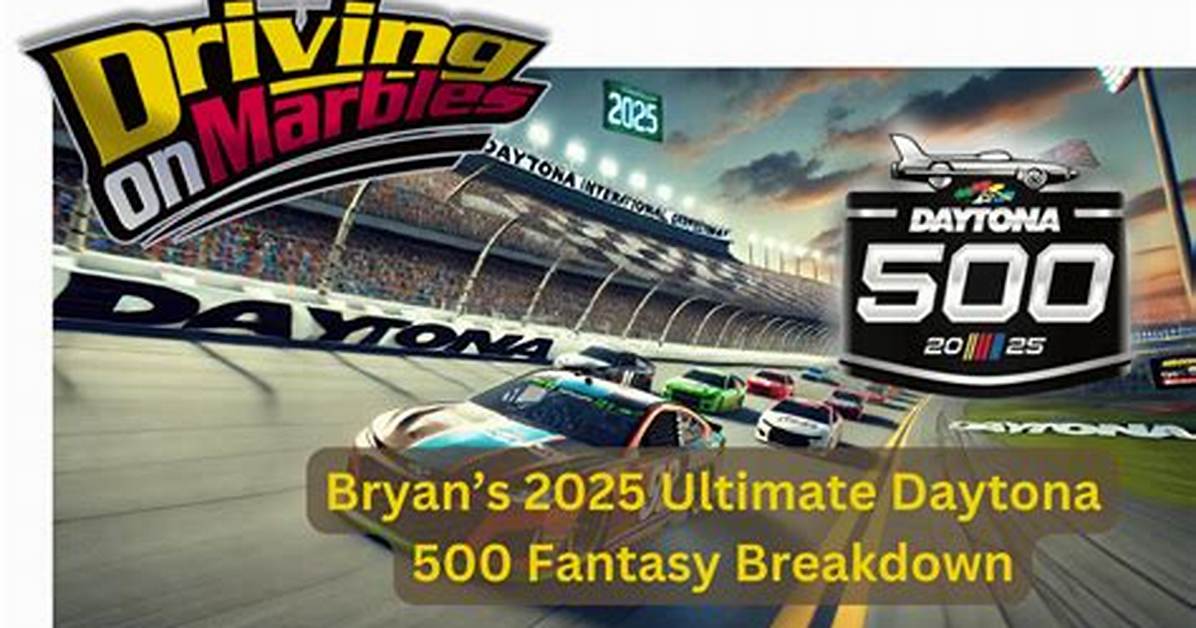
The Daytona 500, often referred to as "The Great American Race," is one of the most prestigious events in the NASCAR calendar. This thrilling race, held annually at the Daytona International Speedway in Florida, attracts millions of fans from around the world. In this comprehensive guide, we will delve into the history, significance, and details of the Daytona 500, ensuring you have all the information you need about this iconic race.
The Daytona 500 marks the beginning of the NASCAR Cup Series season, and its prestige is rivaled only by a few other motorsport events worldwide. With a rich history that dates back to 1959, this race has evolved into a cultural phenomenon, generating significant economic impact and drawing fans from all walks of life. Whether you're a long-time NASCAR enthusiast or a newcomer curious about the event, this article will provide you with valuable insights and information on when the Daytona 500 takes place and what to expect.
As we explore the details of the Daytona 500, we will cover various aspects, including its history, the race format, the drivers, and the excitement surrounding the event. By the end of this article, you will be well-prepared to enjoy this thrilling race and understand why it holds a special place in the hearts of motorsport fans everywhere.
History of the Daytona 500
The Daytona 500 was first held on February 22, 1959, and has since become a significant milestone in the NASCAR schedule. The inaugural race was won by Lee Petty, and it was an immediate success, attracting a large crowd and generating considerable media attention.
Over the years, the Daytona 500 has witnessed numerous memorable moments, from thrilling finishes to dramatic crashes. The race has also seen its share of legendary drivers, including Dale Earnhardt, Richard Petty, and Jimmie Johnson, who have all left their mark on this iconic event.
Throughout its history, the Daytona 500 has undergone various changes in terms of race distance, format, and rules, reflecting the evolving nature of NASCAR. Despite these changes, the race's core spirit remains unchanged: a celebration of speed, skill, and competition.
Race Format and Rules
The Daytona 500 is a 500-mile race, which translates to 200 laps around the 2.5-mile Daytona International Speedway. The race is typically held on the last Sunday of February and serves as the opening event for the NASCAR Cup Series season.
Here's a breakdown of the race format:
- **Qualifying:** The two fastest drivers during the qualifying sessions earn the pole positions.
- **The Duel:** Two qualifying races are held, determining the starting positions for the rest of the field.
- **The Race:** The main event, consisting of 200 laps, where strategy, teamwork, and skill come into play.
Race Rules
The rules for the Daytona 500 are similar to those of other NASCAR races, including:
- **Caution Flags:** Caution flags can be waved for accidents or debris on the track, allowing for pit stops and strategic plays.
- **Green-White-Checkered Finish:** If the race is under caution at the end, NASCAR allows a green-white-checkered finish to ensure a dramatic conclusion.
- **Pit Stops:** Teams must strategize their pit stops for fuel and tires, often impacting the race outcome.

